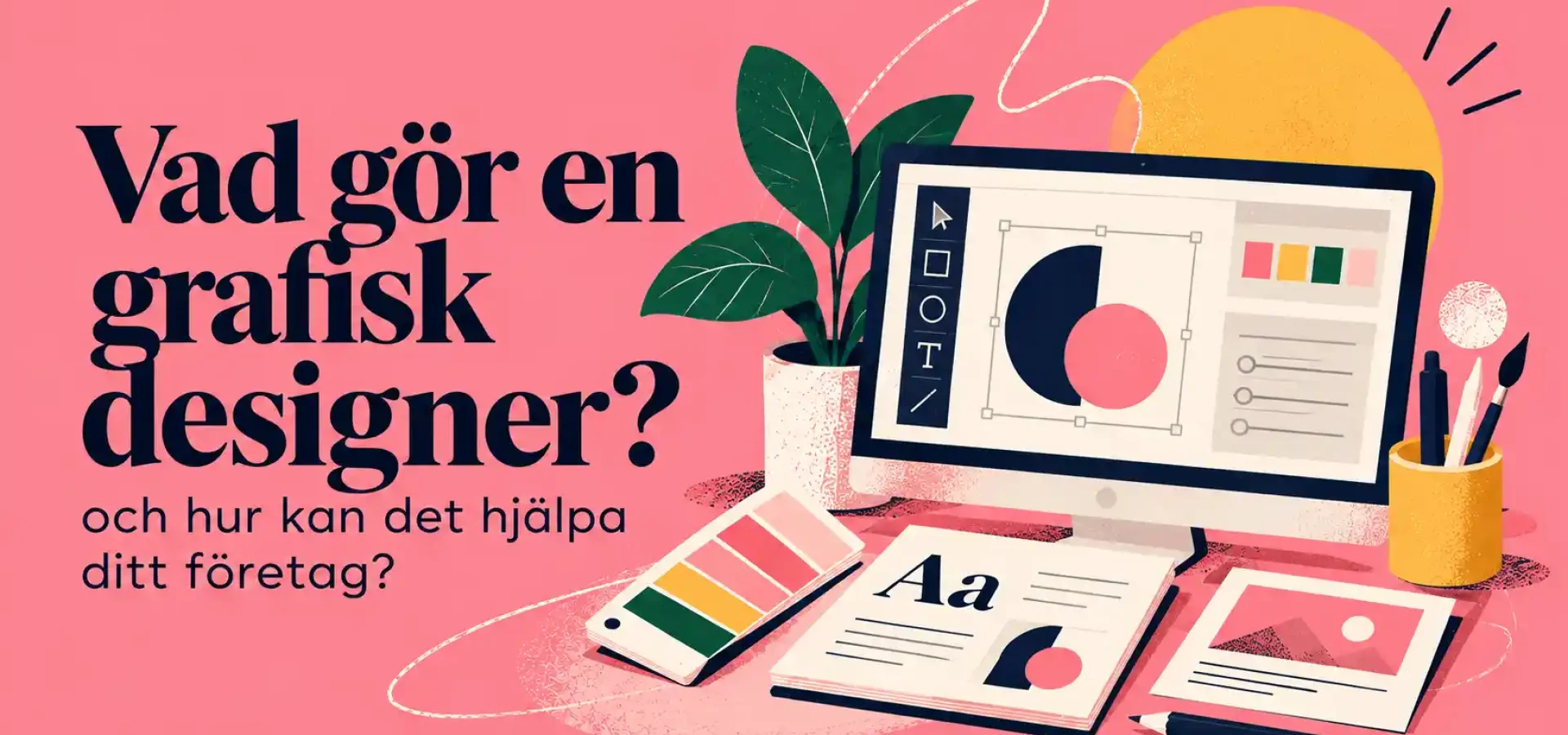
What does a graphic designer do? In short, a graphic designer helps companies to communicate through colour, shape, typography, images and layout. The work is therefore not just about creating attractive designs. Above all, the design should make a message clearer and strengthen the company’s brand.
For small businesses, professional graphic design can make a big difference. A well-thought-out visual identity creates brand recognition and makes the business easier to remember. Furthermore, a clear design can help create a more professional impression.
A graphic designer can work on everything from logos and brand identities to social media, printed materials and packaging. In this guide, we’ll go through the most common tasks and explain when it might be worth enlisting the help of a designer.
What does a graphic designer do?
Graphic design is essentially about visual communication. The designer uses various visual elements to help the recipient understand a message.
The work may, for example, include:
- logos
- graphic profiles
- colour palettes
- typography
- illustrations
- icons
- advertisements
- social media
- brochures
- flyers
- presentations
- packaging
- signs
The scope of the work naturally depends on the project. A start-up may need a completely new visual identity, whilst an established company may only need to update certain elements.
Visual identity creates brand recognition
An important part of the work is to create a cohesive visual identity.
It may consist of several parts, for example:
- logo
- colours
- typeface
- image style
- illustrations
- icons
- graphic forms
Together, these elements create a visual identity for the company.
When the same colours, shapes and typefaces are used consistently across the website, social media and printed materials, the company becomes more recognisable.
That is why graphic design is also an important part of branding.
Logo design is part of the bigger picture
Many people associate graphic designers with logo design. This is understandable, as the logo is often the most visible part of a brand.
However, the work does not end once the logo is finished.
The designer also needs to consider how it works:
- on the website
- on your mobile
- on social media
- on a business card
- in print
- on signs
- on clothing or promotional items
A good logo should therefore work well in a variety of sizes and contexts.
Furthermore, it needs to fit in with the rest of the company’s visual identity.
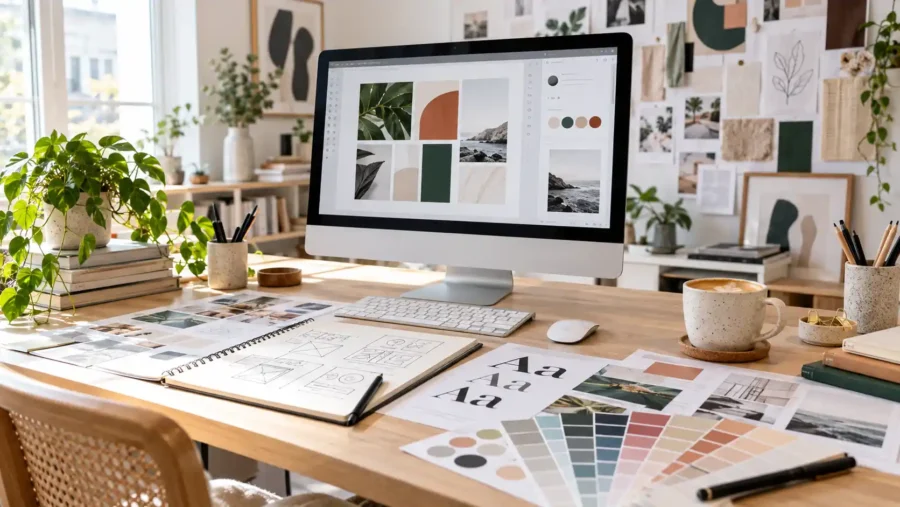
Colours convey emotion
Colour influences how people perceive a company.
That is why a graphic designer does not simply choose colours based on personal taste. Instead, the designer considers the brand’s personality, target audience and areas of use.
Different colours can evoke different feelings.
For example, blue can be perceived as calm and professional, whilst yellow often feels energetic and positive. A dark burgundy shade, on the other hand, can feel more exclusive.
At the same time, the shade makes a big difference. A light blue shade does not convey the same feeling as a deep navy blue.
Typography influences the overall look and feel
Typefaces are another important aspect of graphic design.
A typeface can make a company feel modern, traditional, playful or exclusive. That is why the choice needs to fit in with the rest of the brand.
Among other things, a designer looks at:
- readability
- size
- weight
- line spacing
- heading hierarchy
- font combinations
Furthermore, the typography needs to work equally well both digitally and in print.
A decorative typeface, for example, can work well in a large headline. However, the same font may be difficult to read in longer body text.
Layout creates clarity
Good graphic design is also about organising information.
A well-thought-out layout helps the reader to understand what is most important first. That is why designers work with balance, spacing, size and placement.
This applies, for example, to:
- headings
- pictures
- text block
- icons
- buttons
- graphic elements
When the hierarchy works, the content becomes easier to take in.
In this way, the layout contributes both to the visual appearance and to the communication itself.
Social media design
Social media requires a lot of visual content.
A graphic designer can therefore help to create a consistent look across different platforms.
This could, for example, include:
- Instagram post
- stories
- carousels
- advertisements
- campaign graphics
- cover images
- templates
- video graphics
By using the same colours, typography and visual style, the company’s content becomes more recognisable.
What’s more, ready-made templates save a lot of time when creating new content.
Printed matter requires different skills
Graphic design is not only used in the digital realm.
Many companies still need materials for printing, for example:
- business card
- flyers
- brochures
- posters
- product sheet
- leaflets
- menus
- signs
Here, the designer needs to consider more technical details.
For example, CMYK is often used for printing, whilst digital design usually works with RGB. Furthermore, files need to have the correct resolution, bleed and format.
That is why a visually appealing design on screen is not automatically ready for printing.
Packaging design combines form and function
Packaging design is another area of graphic design.
Here, the design must both convey the brand’s identity and be practical.
A pack may need to contain:
- logo
- product name
- product information
- ingredients
- instructions
- barcode
- graphic elements
At the same time, the layout must work in a physical format.
That is why the designer needs to take both aesthetics and production into account.
Illustrations can give a brand more personality
Illustrations are increasingly being used as part of a company’s visual identity.
These may include:
- icons
- characters
- pattern
- symbols
- hand-drawn elements
- vector illustrations
Illustrations can be particularly useful when ordinary photographs are not enough.
Furthermore, a unique illustration style can make the brand more personal and recognisable.
For best results, the illustrations should use the same colours and design style as the rest of the design.
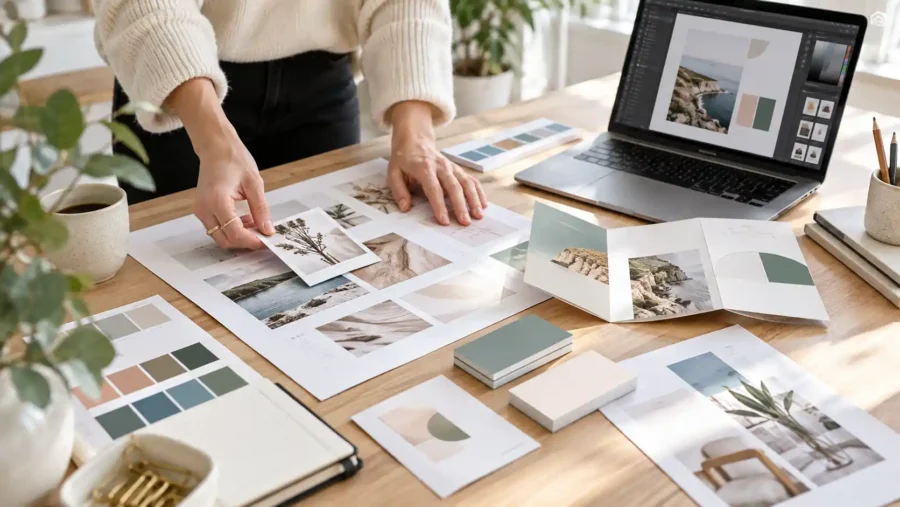
A designer solves visual problems
When you ask What does a graphic designer do? it is easy to focus on the products themselves that are being created.
But a large part of the work is actually about problem-solving.
For example, the designer may need to answer questions such as:
- How can we make the information easier to understand?
- Which message should appear first?
- How can we improve recognition?
- Why does the material feel disjointed?
- How can the design be better suited to the target audience?
Design is therefore not just decoration.
Instead, shape, colour and texture are used to make the message clearer.
Graphic designer and web designer – what’s the difference?
Graphic design and web design overlap, but the roles have different focuses.
Graphic designers work primarily with visual communication. This may include, for example, branding, logos, typography, illustrations and printed materials.
Web design focuses more on how a website works and is experienced.
This often includes:
- navigation
- page structure
- user experience
- mobile optimisation
- interaction
- digital layout
At the same time, these roles often work together.
For smaller businesses, the same designer can also work on both brand identity and web design.
When does a business need graphic design?
Not every business needs to hire a designer for every little task.
However, there are situations where professional help can make a big difference.
This may be the case when the company:
- starting from scratch
- needs a new logo
- wants to create a visual identity
- is set to launch a new product
- needs printed matter
- wants to update its visual identity
- needs more consistent social media
In projects of this kind, a designer can create a clearer structure right from the start.
What’s more, it will be easier to carry on creating content in the same style later on.
Signs that a company’s design needs updating
A brand doesn’t need to change just because a new trend emerges.
Sometimes, however, there are clear signs that the design no longer works.
This could, for example, be:
- the logo looks a bit dated
- the colours are used differently everywhere
- social media lacks a clear style
- the website does not match the brand
- the printed material looks completely different
- the company has changed its target audience
In some cases, minor adjustments are enough.
On other occasions, a more thorough re-do can produce a significantly better result.
How much does a graphic designer cost?
The price varies depending on the scope of the project.
A simple leaflet, for example, requires less work than a complete brand identity.
The cost may be affected by:
- the scale of the project
- how many proposals are to be drawn up
- number of revisions
- research
- strategy
- number of deliveries
- timetable
That is why it is important to compare what is actually included, not just the final price.
A clear quote makes it easier to understand what you’re getting.
What files will you receive from a designer?
The file formats depend on what has been created.
Common formats are:
- SVG
- PNG
- JPG
- EPS
- AI
When it comes to a logo, you should ideally receive it in both vector and raster formats.
SVG works well on the web, whilst PDF and EPS are often used in professional printing contexts.
PNG, on the other hand, is useful when you need a transparent raster image.
A graphic guide brings the design together
Once a visual identity has been finalised, it is a good idea to document how it should be used.
A simple visual guide might include:
- colour codes
- typeface
- logo variants
- logo guidelines
- image style
- icons
- graphic elements
That way, it’s easier to create new material without the style changing every time.
It is also particularly useful when several people are involved in the company’s marketing.
Why is graphic design important for small businesses?
Small businesses often compete with larger companies that have considerably larger marketing budgets.
That is why a clear visual style can be particularly valuable.
Professional design can help a small business to:
- create a sense of recognition
- build trust
- feel more established
- communicate more clearly
- stand out from the competition
That doesn’t mean everything has to be complicated.
On the contrary, a simple but consistent design can be considerably more powerful than a complex style that is constantly changing.
Summary
So, What does a graphic designer do? A graphic designer helps businesses communicate more clearly through colour, typography, logos, illustrations and layout.
The role involves both creativity and problem-solving. Furthermore, the designer may work on everything from branding and social media to printed materials and packaging.
For small businesses, graphic design can help create a more professional and cohesive brand. At the same time, it makes it easier for customers to recognise the business.
Good design is therefore not just about how something looks. Above all, it is about how effectively it communicates.
Find out more about our services
Would you like to create a clearer visual identity for your business? Find out more about our services in graphic design and branding and how Svea Designs can help you create a personalised and professional visual identity.

 Swedish
 English
 Spanish