
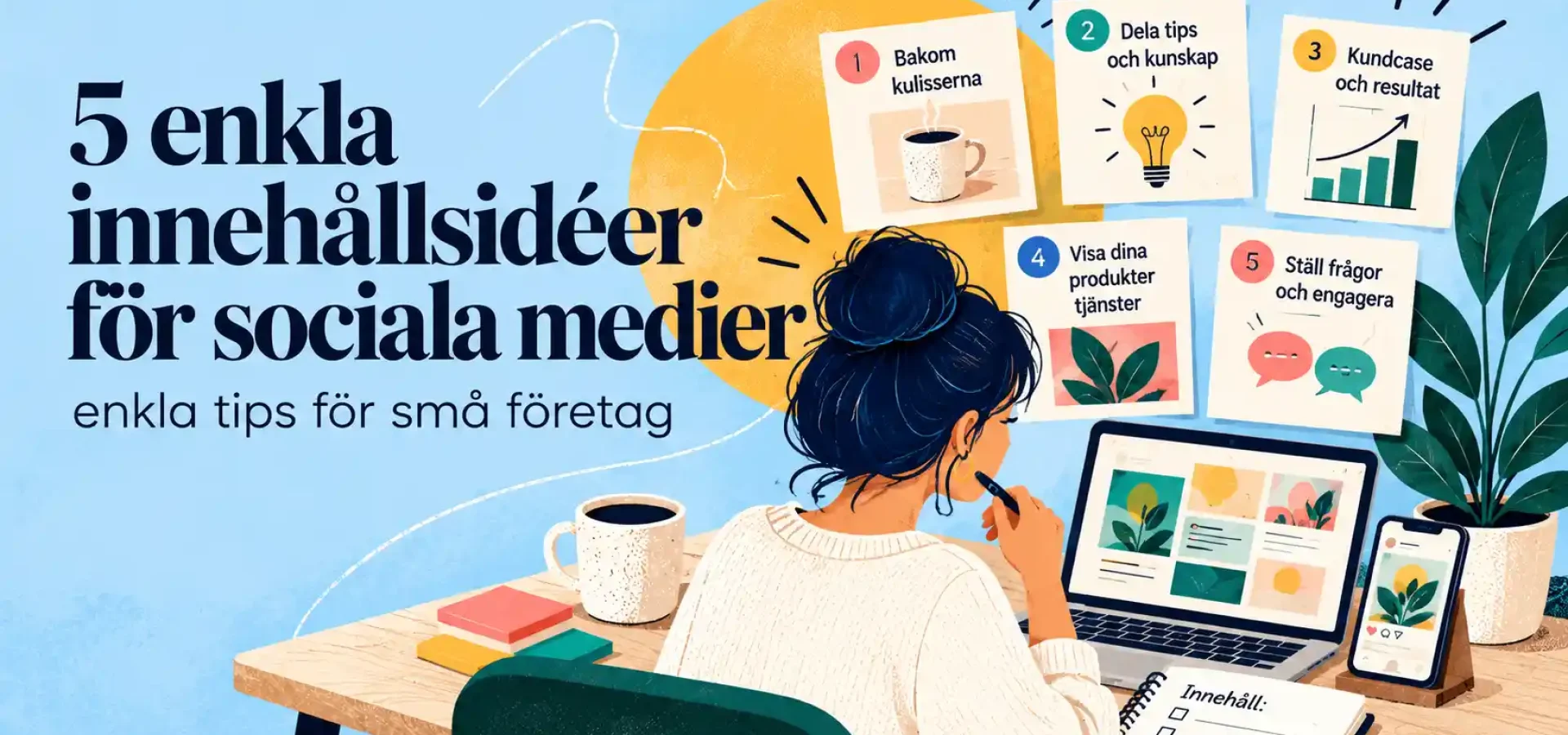
Social media for small businesses can be a simple and effective way to raise your profile, build relationships and reach new customers. At the same time, it’s easy to feel that you have to be everywhere and post all the time.
It doesn’t have to be that way.
The most important thing is to choose the right channels, create content that suits the target audience and work in a way that feels sustainable over time.
Start with the target audience
Before choosing a platform, it’s a good idea to think about who you actually want to reach. Different target audiences use social media in different ways, so it’s better to base your decision on your customers rather than on which channel seems most popular at the moment.
Consider, for example:
- who your customers are
- where they look for inspiration and information
- what sort of content they enjoy
- if you want to build relationships, showcase products or drive traffic to the website
When the target audience is clear, it also becomes easier to choose the right channel.
You don’t have to be everywhere
Many small businesses try to be active on several platforms at the same time. This often means they run out of time and their accounts are updated irregularly.
It’s better to choose one or two channels and do them really well.
Instagram is ideal for businesses that rely heavily on visuals, such as those in the fields of design, food, beauty, interior design or products. Facebook can be useful for local businesses, events and communities. LinkedIn is particularly well-suited to B2B businesses.
Which channel is best therefore depends on where your target audience is and what sort of content you want to create.

Create content that serves a purpose
Good content isn’t just about posting nice photos. Ideally, every post should have a clear purpose.
For example, you can create content such as:
- inspires
- teach something
- displays products or services
- answers frequently asked questions
- shows you how to work
- builds trust
- presents customer case studies or results
This makes the content more varied and, at the same time, more relevant to followers.
Show the process behind the company
Customers are often curious about more than just the final result. That is why it can be valuable to show them parts of the process behind it.
It could be how you plan a project, choose colours, create content, develop a design or work with a client.
Content like this makes the company seem more personal, whilst also helping customers to understand the value of what you offer.
Plan the content in advance
A simple content plan can make a big difference. You don’t need to plan several months ahead. A few weeks at a time is often enough.
For example, you could alternate between:
Inspiration
Showcase ideas, products, colours, projects or anything else that suits your brand.
Knowledge
Share tips, guides and answers to questions that customers frequently ask.
Personal content
Tell us about the company, the process or the people behind the brand.
Sales
Showcase a service, product, promotion or booking option.
By varying the content, the feed becomes more interesting and less sales-oriented.
Create a consistent visual identity
A distinctive visual identity makes it easier for your followers to recognise your business.
That doesn’t mean that all posts have to look exactly the same. However, it’s a good idea for the colours, typography, image style and graphic details to be consistent.
Please feel free to use the same visual style as on your website, in your logo and in other marketing materials. This will help to create a more cohesive brand.
Quality is more important than quantity
You don’t need to post every day to succeed with social media for small businesses.
Two or three well-thought-out posts a week can be more valuable than daily posts without a clear purpose.
The most important thing is to find a level that you can actually maintain over time. Consistency creates familiarity and makes it easier to build trust.
Don’t forget to socialise
Social media isn’t just about publishing content. It’s also about creating dialogue.
Reply to comments, respond to questions and join in conversations when it feels appropriate.
For small businesses, personal contact can be a major advantage. It makes the brand seem more human and can help build stronger relationships with customers.
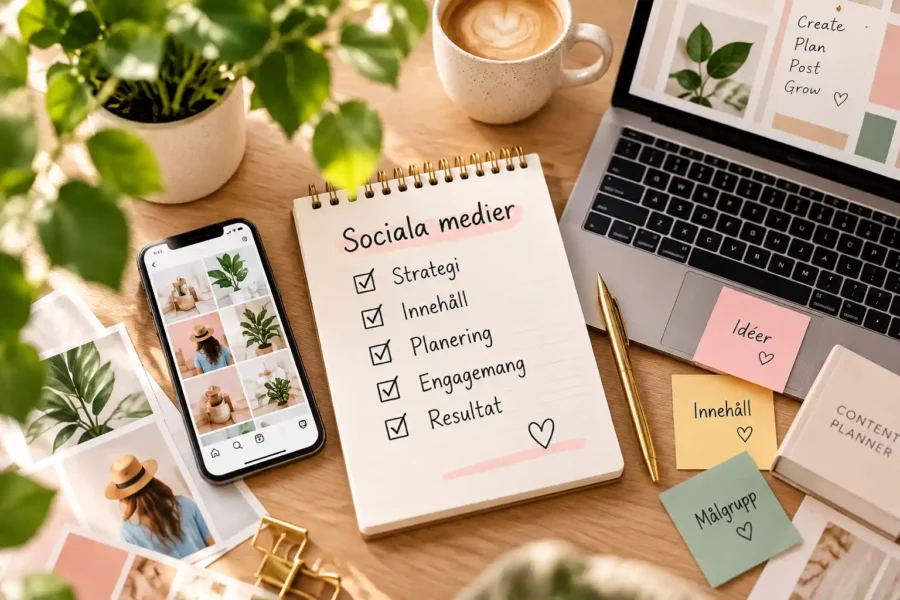
Follow up on what works
After a while, it’s a good idea to see which content actually works best.
Think about:
- which posts are saved
- which ones receive comments
- what people click on
- what content leads to enquiries or bookings
Then use that information to develop the content further.
Summary
Social media for small businesses doesn’t have to be complicated. Start with your target audience, choose a few channels and create content that feels relevant, personal and useful.
With a simple plan, a consistent visual identity and regular monitoring, social media becomes easier to manage and more valuable to the company.

 Swedish
 English
 Spanish